
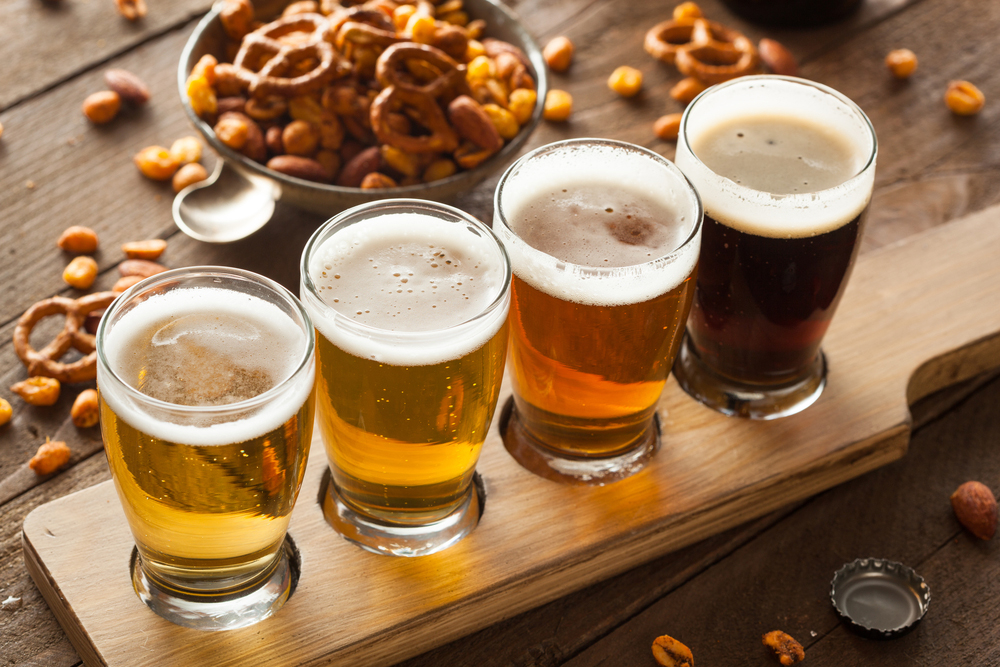
Beer is one of the oldest and most widely consumed alcoholic beverages globally. It is typically made from four primary ingredients: water, malted barley (or other cereal grains), hops, and yeast. The brewing process involves fermentation, where yeast converts sugars into alcohol and carbon dioxide, resulting in the characteristic flavors and carbonation of beer.
There are various types and styles of beer, including lager, ale, stout, porter, and more, each with distinct characteristics in terms of flavor, color, and alcohol content.
Market Size
The UK beer industry is still trying to regain its footing after Brexit, the COVID-19 pandemic, and now record inflation. The cost of a pint of ale or a lager is now at the highest ever level, and both registered their biggest jump in price in the last year.
The onset of lockdowns and a subsequent sharp drop in demand for alcoholic beverages had a profound impact on the production of beer in the UK in 2020. However, in the following year, there was a notable rebound as restrictions eased, and consumer confidence began to recover.
Despite this recovery, the industry has not fully escaped the repercussions of the disruptions, and small breweries, in particular, continue to face challenges in regaining their pre-pandemic standing.
As of the present, production and clearances in the UK beer industry have more or less returned to pre-pandemic values, signifying a degree of stabilization. However, the road to complete recovery remains uncertain, with external factors like inflation adding an additional layer of complexity to the industry’s efforts to regain its footing.
Beer Market Size Volume in the UK from 2009 to 2022

Export / Import
In October 2023 United Kingdom’s Beer exports accounted up to £40.7M and imports accounted up to £37.8M, resulting in a positive trade balance of £2.99M.
Between October 2022 and October 2023 the exports of the United Kingdom’s Beer have decreased by £-7.05M (-14.8%) from £47.8M to £40.7M, while imports decreased by £-3.07M (-7.51%) from £40.8M to
£37.8M. Beer were exported mostly to United States (£10.7M), Ireland (£9.67M), France (£3.57M), Netherlands (£2.23M), and Canada (£2.04M), and were imported mostly from Italy (£8.2M), Ireland (£7.6M), Netherlands (£6.09M), Spain (£3.47M), and Germany (£3.44M).
In 2023, the decrease in Beer’s year-by-year exports was explained primarily by a decrease in exports to United States (£-7.25M or -48.5%), Canada (£-1.28M or -31.2%), and China (£-246k or -37.9%).
The decreased in Beer’s year-by-year imports was explained primarily by a decrease in imports from Spain (£-2.1M or -77.2%), Germany (£-556k or -30.2%), and Mexico (£-539k or -49.1%).
Market analysis of beer consumers
The main consumers of beer in England are people aged 15 to 34 years. They are considered to be the heaviest drinkers. This group likes to ramble and party. Therefore, they are the target market for most beer companies. Moreover, studies show that the current designs of beer appeal more to the youths than older people. Adults aged between 35 and 55 are also high alcohol consumers.

These consumers are recognized for their frequenting of pubs, attendance at family gatherings, corporate events, and major sporting occasions where alcohol consumption is prevalent. Their choice of pub is not solely determined by the available beer brands but is equally influenced by the ambiance and opportunities for social interaction.
The majority of beer consumers in the UK exhibit a conservative and loyal approach to specific brands. This loyalty is cultivated by factors such as the distinct taste associated with certain brands, corporate social responsibility initiatives, and sponsorships, particularly within club settings.

Furthermore, consumers place a premium on the quality of ingredients used in beer production and the brewing process over time. Consequently, brand image and product quality emerge as the foremost considerations. Nevertheless, the pricing of products is increasingly becoming a significant factor, attributed to the high cost of living and the prevailing tax regime.
Consumer spending on beer in the UK from 2009 to 2022 (in a million GBP)

Competitive Landscape
In the beer market in England, there are many well-known brands that produce traditional and craft beers. Popular brands on the beer market in the UK are Budweiser, Guinness, Heineken, Stella Artois, Carlsberg, Corona and others.
Leading beer brands ranked by brand awareness in the United Kingdom in 2023

Budweiser
The most well-known Budweiser is an American lager produced by Anheuser-Busch. It is one of the most popular and widely recognized beer brands globally. Budweiser is known for its pale lager, and its flagship beer is often referred to as the “King of Beers.” It has a light, crisp taste and is a prominent symbol of American beer culture.

Guinness
Guinness’ beer is a famous Irish stout that has been brewed since the 18th century. Guinness, known for its dark color, rich flavor, and creamy mouthfeel. The beer is characterized by roasted malt flavors, giving it notes of coffee and chocolate. In cans and bottles of Guinness Draught, a nitrogen widget is often included. When the container is opened, the widget releases nitrogen, creating the signature creamy head, similar to a freshly poured pint at a pub. Guinness has been known for its memorable advertising campaigns and slogans. One of the most famous slogans is “Guinness is Good For You,” which was used in the early 20th century.

Heineken
Heineken is a Dutch beer brand that has become one of the most well-known and widely consumed beers globally. The company was founded in 1864 by Gerard Adriaan Heineken in Amsterdam, Netherlands. The brewery’s flagship beer is the pale lager known as Heineken. Heineken is a pale lager, characterized by its light golden color and a balanced taste profile. It is a bottom-fermented beer brewed with malted barley, hops, water, and a specific yeast strain.
Heineken has played a role in popular culture and has been featured in various movies, advertisements, and events. The brand is often associated with socializing, parties, and global celebrations.

Stella Artois
Stella Artois is a popular Belgian lager known for its golden color and crisp flavor. Originating in Leuven, Belgium, the beer has a history dating back to 1366 when it was initially brewed as a Christmas gift. The brand is currently owned by Anheuser-Busch InBev and has achieved global recognition, becoming one of the best-selling Belgian beers worldwide.
Often served in a distinctive chalice-shaped glass, Stella Artois is associated with a premium and sophisticated image, making it a symbol of Belgian brewing tradition.

Carlsberg
Carlsberg, founded in 1847 in Copenhagen, Denmark, is a renowned brewing company with a global presence. The flagship beer, Carlsberg lager, is known for its light and crisp taste, making it one of the company’s most popular offerings.
With an iconic green label and slogans like “Probably the best beer in the world,” Carlsberg has established itself as a prominent player in the international beer market. In addition to the classic Carlsberg lager, the company produces a range of other beers, including Carlsberg Export, Carlsberg Elephant, and Tuborg. Committed to sustainability, the Carlsberg Group emphasizes environmentally friendly practices and innovation in its brewing processes.

Corona
Corona, brewed by Grupo Modelo in Mexico, is a well-known pale lager recognized for its light and crisp taste. Marketed with an iconic clear bottle adorned with a crown logo, Corona is often associated with a relaxed beach lifestyle. Its global popularity has made it one of the best-selling beers worldwide, with a significant presence in the United States.
Served with a wedge of lime or lemon, Corona is enjoyed for its refreshing flavor and is a symbol of leisure and enjoyment.

Carling
Carling is a popular British lager with a history dating back to 1840, known for its widespread availability and drinkability. Originally brewed by Thomas Carling in Canada, it became a significant brand in the United Kingdom. Carling is recognized for its clean and refreshing taste, making it a popular choice in pubs and bars across the UK. The brand is currently owned by Molson Coors, one of the world’s largest brewing companies.
Carling offers a range of products, including Carling Lager, Carling Black Label, and Carling Cider, catering to different consumer preferences.

Beer packaging
In the dynamic landscape of the UK beer market, various packaging types play a crucial role in catering to consumer preferences. The primary packaging options include bottles, cans, kegs, bag-in-box, and pouches. Each packaging type offers unique advantages, contributing to the diverse array of choices available to consumers.
As of the latest market analysis in 2023, cans have emerged as the dominant packaging type, capturing the major market volume share. This shift in preference could be attributed to factors such as convenience, portability, and recyclability, aligning with the evolving lifestyle choices and sustainability concerns of contemporary consumers.
Delving further into the composition of beer packaging, the choice of materials is a significant aspect influencing both environmental impact and consumer perception. In the UK beer market, key packaging materials include metal, glass, PET (polyethylene terephthalate), board, and foil.
Metal packaging, commonly associated with cans and kegs, offers excellent protection against light and oxygen, ensuring the preservation of the beer’s quality.

Glass, a classic and widely used material, provides an impermeable barrier, preserving the taste and freshness of the beer while also being highly recyclable.

PET, a lightweight and durable plastic, is often used in bottles, offering both convenience and environmental friendliness. Board, commonly found in bag-in-box packaging, provides a sustainable and eco-friendly option, particularly favored for its reduced carbon footprint.

Foil, employed in various packaging formats, contributes to the barrier properties necessary for preventing the ingress of external elements that could compromise the beer’s quality. The choice of packaging material thus reflects a delicate balance between functionality, sustainability, and consumer preferences.

In summary, the UK beer market exhibits a diverse landscape of packaging types, with cans leading the market share in 2023. The selection of materials such as metal, glass, PET, board, and foil underscores the industry’s commitment to meeting both consumer demands and environmental considerations.
Prospects of the beer market
The prospects for the development of the beer market in England appear dynamic and multifaceted. Despite recent challenges such as Brexit, the COVID-19 pandemic, and record inflation, there is potential for recovery and growth. The rising popularity of artisanal products from small breweries suggests a shift in consumer preferences towards unique and locally-produced options.
Furthermore, with innovative strategies, such as expanding regional production and offering take-away options, breweries may find new avenues to not only weather challenges but also thrive in an evolving market landscape.
To quickly respond to crises, understand consumer sentiment and offer new solutions, you need to be aware of the latest trends and statistical information. Contact KOLORO and order desk marketing research of your target market. We are the best in our business!